
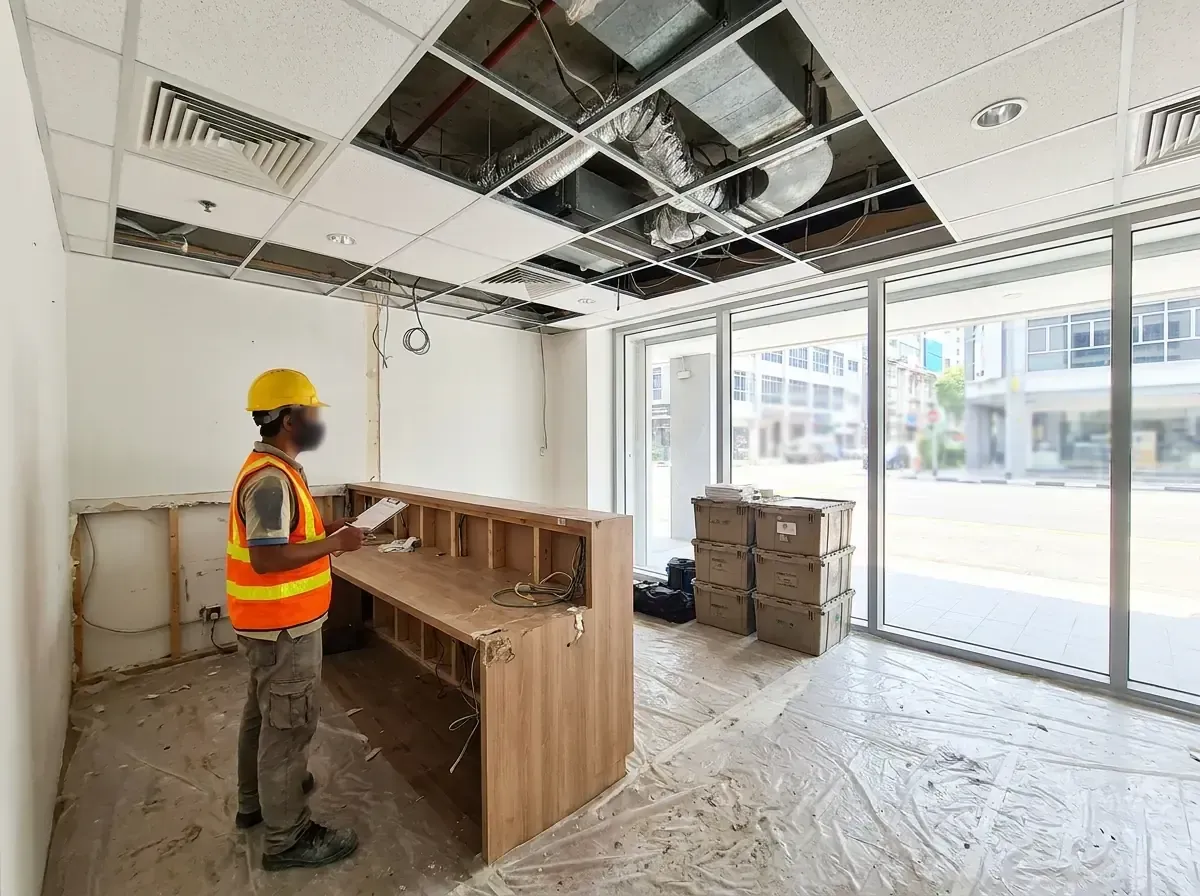
Clinic Reinstatement Singapore: End-of-Lease Guide
Handing back a medical unit at lease end involves far more than stripping out partitions and repainting walls. Clinic reinstatement in Singapore requires coordinated regulatory notifications to MOH, NEA, and potentially radiation safety authorities — on top of the standard landlord reinstatement obligations every commercial tenant faces. At Contract Builders, we handle commercial reinstatement services in Singapore as a BCA-registered, bizSAFE Star contractor with direct experience decommissioning healthcare spaces. This guide walks clinic, dental, physio, and aesthetic practice owners through each step so nothing gets missed.
Why Medical Space Reinstatement Is More Complex
Standard tenancy reinstatement for an office typically means removing partitions, ceiling works, floor finishes, and M&E installations before returning the unit to bare condition. Clinic reinstatement works in Singapore go several layers deeper.
In practice, a healthcare tenancy reinstatement involves removing systems that don't exist in regular offices: medical gas piping for oxygen or nitrous oxide, dedicated electrical circuits for imaging equipment, enhanced HVAC and ventilation, clinical hand-wash basins plumbed into surgical-grade drainage, and sometimes anti-microbial or epoxy flooring that must be restored to standard commercial-grade finishes.
GP Clinics vs Dental vs Aesthetic Practices
The complexity varies significantly depending on the type of practice.
GP clinics tend to have the simplest reinstatement scope — consultation rooms, a dispensary counter, and basic plumbing. The regulatory steps focus on MOH licence cessation and patient record management.
Dental clinics add substantial complexity. X-ray units are classified as radiation sources under NEA's Radiation Protection and Nuclear Science framework. You cannot simply sell, relocate, or discard dental X-ray equipment without regulatory clearance. Lead-lined walls in X-ray rooms need proper removal, and dental chair plumbing with vacuum suction lines requires specialist disconnection.
Aesthetic clinics sit somewhere in between, though laser equipment, specialised extraction ventilation, and medical-grade cabinetry all add scope that a standard reinstatement contractor singapore may not anticipate if they lack healthcare fit-out experience.
Physiotherapy clinics are generally less complex on the M&E side, but treatment room layouts often include structural reinforcements for ceiling-mounted equipment, built-in hydrotherapy plumbing, or modified floor loadings that all need reversal.
The Regulatory Sequence Most Clinic Owners Overlook
Getting the regulatory steps in the wrong order — MOH licence cessation, NEA notifications, and landlord coordination — can delay your lease handover and trigger compliance penalties. Here is the correct sequence.

Step 1: MOH Licence Cessation
Before any physical reinstatement works begin, you must formally notify MOH and obtain approval to cease operations or relocate. This isn't optional — it's a requirement under the Healthcare Services Act (HCSA). In most cases, you also need to display prominent patient notification in the clinic for at least four weeks before closure, and arrange for proper transfer or retention of patient medical records in accordance with MOH's record retention requirements.
Those retention periods vary by record type and patient category. For example, paper outpatient records must be kept for a minimum of six years from the last consultation or treatment, while paper inpatient records for adult patients require fifteen years. Electronic or computerised records carry a longer obligation — lifetime plus six years. High-risk patients or cases require a minimum of fifteen years. These requirements are set out in MOH Circular 84/2022, and clinic operators should verify the specific retention periods applicable to their practice before proceeding with closure.
Starting demolition before completing MOH's cessation process can trigger regulatory penalties and delay your lease handover. We always advise clients to begin this paperwork well before the physical reinstatement timeline.
Step 2: NEA Notifications
Two NEA-related obligations come up frequently.
Radiation equipment: If your clinic operates dental X-ray units, CBCT scanners, or any radiation source, decommissioning must be notified to the Radiation Protection and Nuclear Science Group under NEA. This applies to removal, relocation, or disposal.
Clinical waste: Medical waste generated during decommissioning — sharps containers, expired pharmaceuticals, biological waste — must be disposed of through licensed toxic industrial waste collectors under NEA's framework. General waste disposal is not permitted. Mixing clinical waste with general demolition waste is a compliance breach, and it's one that your reinstatement contractor singapore needs to manage proactively.
Step 3: Landlord and Building Management Coordination
With regulatory clearances underway, the next step is confirming your landlord's specific reinstatement requirements. Most commercial leases require return to original bare condition, but "bare condition" can be interpreted differently across landlords and building managers.
For clinic tenants, this typically extends to removing all specialised plumbing, medical cabinetry, signage, and any structural modifications made to support equipment loads. We recommend getting written confirmation of the expected handover condition early — ideally before you brief your reinstatement contractor.
What Makes Clinic Reinstatement Costs Higher
Clients often ask why clinic reinstatement costs run above standard office rates. The answer comes down to three factors.
Licensed Tradespeople for Regulated Systems
Medical gas pipework, radiation equipment, and clinical-grade electrical circuits all require licensed tradespeople for safe removal. These are not tasks a general demolition crew can handle. For dental clinic reinstatement in Singapore specifically, the radiation equipment decommissioning alone adds time, cost, and compliance documentation.
Scope of M&E Removals
A typical commercial interior design and fit-out for a clinic includes dedicated circuits for imaging equipment, boosted water supply for sterilisation, medical air compressor installations, and enhanced ventilation systems with HEPA filtration. Every one of these systems needs removal during reinstatement, and each involves a different trade specialisation.
Flooring and Wall Finish Restoration
Healthcare spaces often use seamless epoxy flooring, anti-microbial wall coatings, or lead lining in X-ray rooms. Restoring these surfaces to standard commercial finishes — typically vinyl tile or carpet, painted plasterboard — adds a restoration step that office reinstatement doesn't require.
Because of these variables, cost per square foot for clinic reinstatement works can vary widely. A blanket rate isn't realistic without assessing the specific systems installed. We always recommend a site assessment before quoting.
Choosing a Reinstatement Contractor for Healthcare Spaces
Not every reinstatement contractor in Singapore has experience with medical spaces. When evaluating clinic fit out companies Singapore-based practice owners should look for contractors who understand the specific requirements.
What to Look For in a Medical Fit Out Contractor
Healthcare project track record. A contractor who has delivered MOH-compliant clinic renovation projects understands the regulatory landscape in both directions — fit-out and decommissioning. The same expertise that ensures a clinic meets MOH standards during build applies in reverse during reinstatement.
BCA registration and safety certification. For reinstatement works singapore regulations require, your contractor should hold current BCA registration. BizSAFE certification matters too, particularly for sites involving hazardous material removal.
Single-team coordination. Medical space reinstatement involves multiple trades working in sequence — demolition, M&E disconnection, waste disposal, surface restoration. A contractor running this with subcontracted teams across different companies creates coordination gaps. In our experience, a single integrated team avoids the scheduling conflicts and communication breakdowns that push projects past their lease deadline.
Clinic Fit-Out Contractors Who Also Handle Reinstatement
This is worth highlighting because many clinic fit out Singapore specialists focus exclusively on the build phase. A clinic renovation contractor Singapore practice owners initially engaged for fit-out may not offer reinstatement services, or may not have the decommissioning expertise for regulated systems.
Working with a medical fit out contractor Singapore practices can rely on for both fit-out and reinstatement has a practical advantage: the contractor already knows exactly what was installed, how it was connected, and what regulatory submissions were made during the original build. That institutional knowledge speeds up the reinstatement process considerably.
A Practical Reinstatement Timeline for Clinic Operators
Clinic reinstatement involves two distinct phases: the regulatory and planning process, and the physical reinstatement works themselves. Physical reinstatement work for a clinic typically takes between one and eight weeks depending on scope — smaller GP clinics sit at the shorter end, while dental or aesthetic practices with radiation equipment and complex M&E systems require more time.
However, the total process — including MOH licence cessation, NEA notifications, patient record arrangements, landlord coordination, and the physical works — runs considerably longer. A realistic breakdown looks roughly like this:
- Months 6–5 before lease expiry: Review your lease reinstatement clause, begin MOH licence cessation application, and engage your reinstatement contractor for a site assessment. Many commercial leases require six months or more of advance notice for reinstatement, so check your specific lease terms early.
- Months 5–3 before lease expiry: Complete patient notifications, arrange medical record transfer or storage, submit NEA notifications for radiation equipment and clinical waste disposal, and confirm landlord handover requirements in writing.
- Final 1–8 weeks before lease expiry: Physical reinstatement works — demolition, M&E removal, surface restoration, progressive inspections, final cleaning, landlord inspection, and defect rectification if needed.
Starting this process at least six months before lease expiry is strongly recommended. That lead time accommodates regulatory processing, gives you time to engage tradespeople at competitive rates, and leaves buffer for inspection failures or unexpected scope changes. Starting with only two or three months remaining creates pressure that inevitably costs more — tradespeople booked on short notice charge accordingly, and compressed timelines leave no room for delays.
Frequently Asked Questions
Which clinic fit out companies in Singapore also handle reinstatement?
Look for BCA-registered contractors with a verifiable healthcare fit-out track record, such as Contract Builders. A company that has built MOH-compliant clinic spaces understands the regulated systems — medical gas, radiation equipment, clinical drainage — and can reverse them correctly during decommissioning. Not all clinic fit-out specialists offer reinstatement services, so confirm this upfront.
How much do clinic reinstatement works cost per square foot in Singapore?
There is no reliable blanket rate for clinic reinstatement because costs depend on the systems installed — medical gas pipework, radiation equipment, epoxy flooring, and enhanced M&E all add scope beyond standard office reinstatement. A site assessment is the only accurate way to determine cost. Expect clinic reinstatement to run higher per square foot than commercial office reinstatement.
What MOH licensing and regulatory steps are required before a clinic can be decommissioned?
Under the Healthcare Services Act, clinic operators must formally notify MOH and obtain approval to cease operations before physical works begin. Patient notifications must be displayed for at least four weeks, and medical records must be retained or transferred according to MOH Circular 84/2022 — with retention periods ranging from six years for outpatient records to lifetime-plus-six-years for electronic records.
Do dental clinic reinstatement works require special regulatory approvals?
Yes. Dental X-ray units and CBCT scanners are classified as radiation sources under NEA's Radiation Protection and Nuclear Science framework. Their removal, relocation, or disposal must be notified to NEA before work begins. Lead-lined walls in X-ray rooms also require specialist removal, and dental chair plumbing with vacuum suction lines needs qualified tradespeople — not a general demolition crew.
How far in advance should a clinic operator start the reinstatement process?
At least six months before lease expiry. This timeline accommodates MOH licence cessation applications, NEA notifications, patient record arrangements, and landlord coordination — all of which must be completed before physical works begin. Starting too late compresses the schedule, forces short-notice bookings at higher rates, and leaves no buffer if inspections identify defects requiring rectification.
What is the difference between a clinic fit-out contractor and a clinic reinstatement contractor in Singapore?
A clinic fit-out contractor builds the space to MOH-compliant standards — installing medical gas, dedicated circuits, and clinical finishes. A reinstatement contractor reverses all of this at lease end, restoring the unit to bare commercial condition. The best outcome is a contractor experienced in both, since knowledge of what was originally installed — and how it was connected — makes the decommissioning process faster and less prone to compliance gaps.
Get Your Clinic Reinstatement Right the First Time
When we delivered the Benchmark Physio project — a full physiotherapy clinic renovation including treatment-room layout and healthcare compliance — the reinstatement knowledge built during that process was just as valuable as the fit-out expertise itself. Understanding what goes in is exactly what makes the taking-out process efficient.
If your clinic, dental practice, or aesthetic studio is approaching lease end, a site assessment is the smartest first step. It clarifies your actual reinstatement scope, identifies regulatory steps specific to your practice type, and gives you a realistic timeline and budget before you commit. Reach out to Contract Builders at 8368 5194 or email go@contract.builders — we'll walk through your space and map out exactly what's needed.