
Office Reinstatement Singapore: What Tenants Need to Know
When a commercial lease ends in Singapore, most tenants face the same obligation: restore the space to the condition it was in when they first moved in. This is reinstatement, and it is one of the most time-pressured, easily mishandled parts of any tenancy exit.
Done properly, reinstatement protects your security deposit, meets your lease obligations, and hands the space back to the landlord without dispute. Done poorly or left too late... it results in withheld deposits, penalty clauses, and last-minute contractor costs that far exceed what a planned approach would have cost.
This guide covers what office reinstatement in Singapore involves, what landlords typically require, and what tenants need to know before the lease end date arrives.
What Is Office Reinstatement?
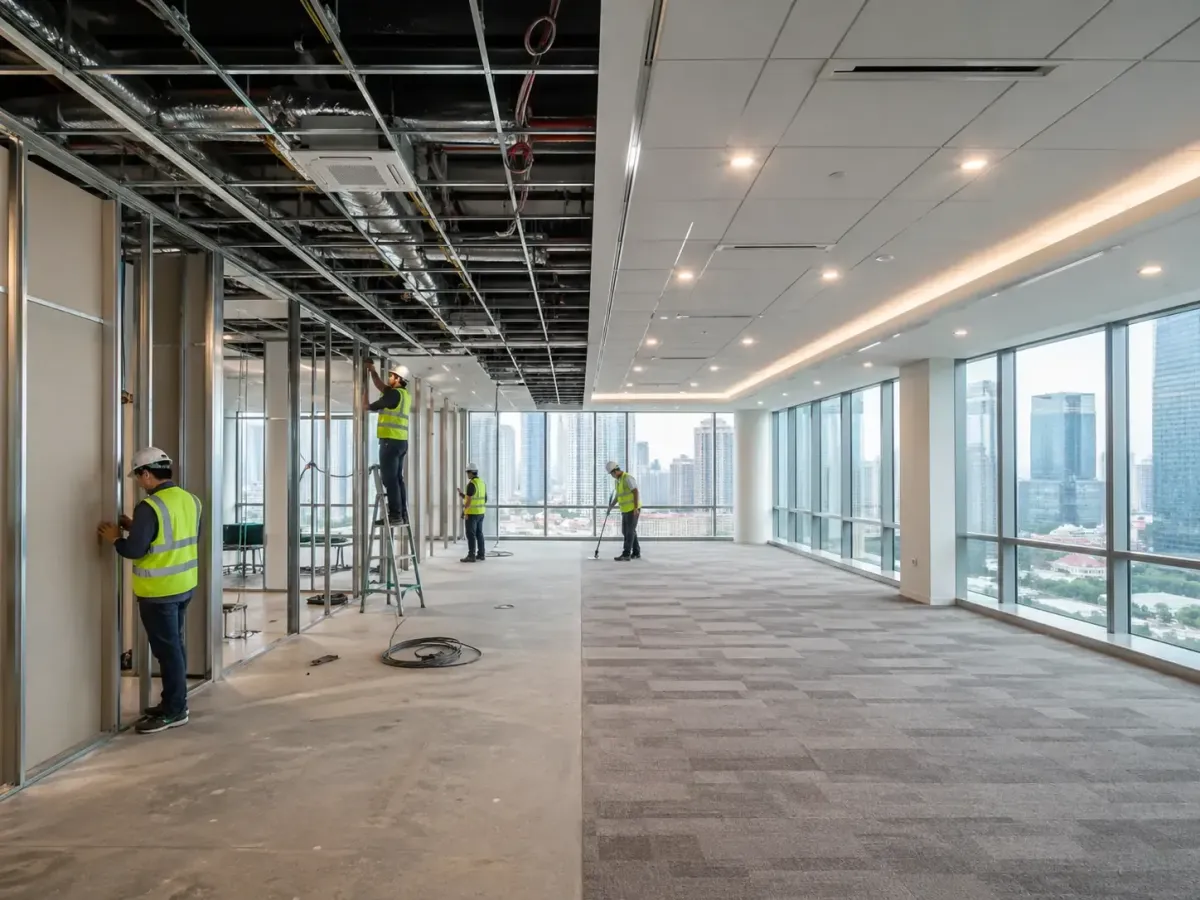
Reinstatement refers to restoring a leased commercial, retail, or office space to the condition it was in before the tenancy began. In practical terms, this means undoing whatever modifications were made during the tenancy — removing partitions, fixtures, and custom fit-outs, repairing any damage, and returning the space to a clean, neutral, handover-ready state.
The obligation to reinstate is written into most commercial leases in Singapore. The scope of that obligation depends on the original lease agreement, what modifications were approved during the tenancy, and what the landlord requires upon exit.
When Does Reinstatement Apply?
Reinstatement is required at the end of a commercial tenancy when:
The lease agreement includes a reinstatement clause (most commercial leases do)
The tenant has made modifications to the space — partitions, electrical works, false ceilings, flooring, custom carpentry, plumbing changes
The landlord requires the space returned to its base condition for the next tenant
Even if modifications were approved by the landlord during the tenancy, this does not automatically waive the reinstatement obligation. Tenants should check the original lease and any approval letters carefully before assuming what does and does not need to be removed.
What Does Reinstatement Work Typically Cover?
The scope of reinstatement works varies depending on what was done to the space during the tenancy. A typical office reinstatement in Singapore includes:
Dismantling and Removal
Removing all partitions, glass walls, and internal divisions added during the tenancy
Taking down custom carpentry, built-in shelving, feature walls, and reception counters
Removing suspended ceilings or ceiling modifications
Removing non-original flooring such as timber, vinyl, or carpet tiles
Taking out custom lighting installations and returning to base building lighting
Restoration Works
Patching, plastering, and repainting walls to a neutral, landlord-approved finish
Restoring original flooring where it was covered or modified
Reinstating original ceilings where they were altered
Removing or making good non-original electrical and data installations
Removing non-original plumbing and making good any penetrations
Handover Preparation
Full cleaning of the space to handover-ready condition
Final walkthrough and snagging before landlord inspection
Documentation and sign-off
Commercial Property Types That Require Reinstatement
Reinstatement applies across all commercial property types, not just offices. Contract Builders carries out reinstatement works for:
Office spaces— from small units to full-floor tenancies, including executive suites, co-working buildouts, and corporate offices
Retail units— shopfront fit-outs, display systems, feature walls, and retail partitioning
F&B outlets— kitchen extraction systems, wet area plumbing, custom counters, and floor treatments
Clinics and healthcare spaces— clinical partitioning, specialist flooring, medical gas points, and sterilisation zone modifications
Hospitality venues— bar and lounge fit-outs, acoustic treatments, and bespoke joinery
Industrial and warehouse spaces— mezzanine structures, internal offices, and racking systems
Each property type has its own reinstatement complexity. A clinic fit-out, for example, involves clinical-grade modifications that require careful dismantling without damaging the base building. A high-spec office may include raised floors, complex ceiling systems, and data infrastructure that all need to be addressed methodically.
What Landlords in Singapore Typically Require
While requirements vary by landlord and building, most commercial landlords in Singapore expect the following at the end of a tenancy:
All tenant-installed partitions and modifications removed
Walls returned to a neutral painted finish (white or off-white is standard)
Flooring returned to base building condition or made good where original flooring was removed
All electrical and data works beyond the base building spec removed or properly terminated
Air-conditioning systems in working order and serviced
No outstanding maintenance issues or damage caused during the tenancy
The space cleaned and ready for the next tenant to begin their own fit-out
Landlords will inspect the space against the original handover condition report. Any shortfall is typically deducted from the security deposit — and in cases of significant non-compliance, the tenant may be billed beyond the deposit amount.
Common Mistakes Tenants Make With Reinstatement
Leaving It Too Late
Reinstatement works take time. A full office reinstatement for a mid-sized unit can take anywhere from one to three weeks depending on the scope. Tenants who only start looking for a contractor in the final two weeks of their lease end up paying premium rates for rushed work — or worse, handing the space back incomplete and losing part of their deposit.
The right time to start planning reinstatement is two to three months before the lease end date.
Assuming Approved Modifications Do Not Need to Be Removed
Landlord approval to carry out fit-out works during the tenancy does not mean those works can stay at the end. Unless the lease explicitly states that specific modifications may be retained, the reinstatement obligation still applies. Always read the lease and any approval letters before deciding what stays and what goes.
Using a General Contractor Without Commercial Reinstatement Experience
Reinstatement is not simply demolition. It requires careful, methodical removal that does not damage the base building fabric, followed by skilled restoration work. A contractor without reinstatement experience will often damage surfaces during removal, requiring additional remediation — adding cost and time to the project.
Not Getting a Clear Scope Agreement Before Work Begins
Disputes about what was and was not included in a reinstatement quote are common. Before any work begins, the scope should be agreed in writing — what is being removed, what is being restored, and what the finish standard is. This protects both the tenant and the contractor.
How to Choose a Reinstatement Contractor in Singapore
When selecting a reinstatement contractor, look for:
Demonstrated experience across commercial property types— reinstatement in a clinic is different from reinstatement in an office or retail unit
A clear, written quotationthat specifies scope, timeline, and what happens if additional work is discovered
The ability to manage the full scope— contractors who handle dismantling, restoration, and final cleaning under one team eliminate coordination gaps and reduce the risk of delays
Familiarity with Singapore landlord requirements— an experienced contractor knows what landlords typically inspect for and can flag issues before the final walkthrough
Contract Builders' Reinstatement Process
Contract Builders handles commercial reinstatement across offices, clinics, retail units, F&B outlets, and hospitality spaces in Singapore. The process is structured to give tenants a clear timeline and a handover-ready space without last-minute surprises.
Site AssessmentThe team conducts a thorough on-site assessment against the original lease conditions, identifying the full scope of works required and flagging anything that may need landlord clarification before work begins.
Quotation and TimelineA written quotation is provided with a clear breakdown of scope and a realistic timeline. No open-ended estimates — the scope is fixed before work starts.
Dismantling and RemovalAll tenant modifications are carefully dismantled and removed. Materials are disposed of responsibly, and the base building fabric is protected throughout.
Restoration WorksWalls, ceilings, flooring, and services are restored to the required condition. Every surface is finished to a standard that passes landlord inspection.
Final Inspection and HandoverA final walkthrough is carried out before the landlord's inspection, addressing any snagging items. The space is cleaned and documented for handover.
Planning Your Reinstatement
If your lease end date is approaching, the sooner you begin planning the better. Start with:
A review of your lease agreement and original handover condition report
An inventory of all modifications made during the tenancy
A clear target handover date that gives the contractor enough time to complete works properly
Contract Builders is available for site assessments and quotations for office reinstatement, clinic reinstatement, and commercial reinstatement across Singapore.
Call 8368 5194, email go@contract.builders, or find out more about our reinstatement services
Contract Builders Singapore delivers commercial reinstatement, office renovation, and interior design for offices, clinics, and commercial spaces. Available Monday to Saturday, 9am to 5pm.