
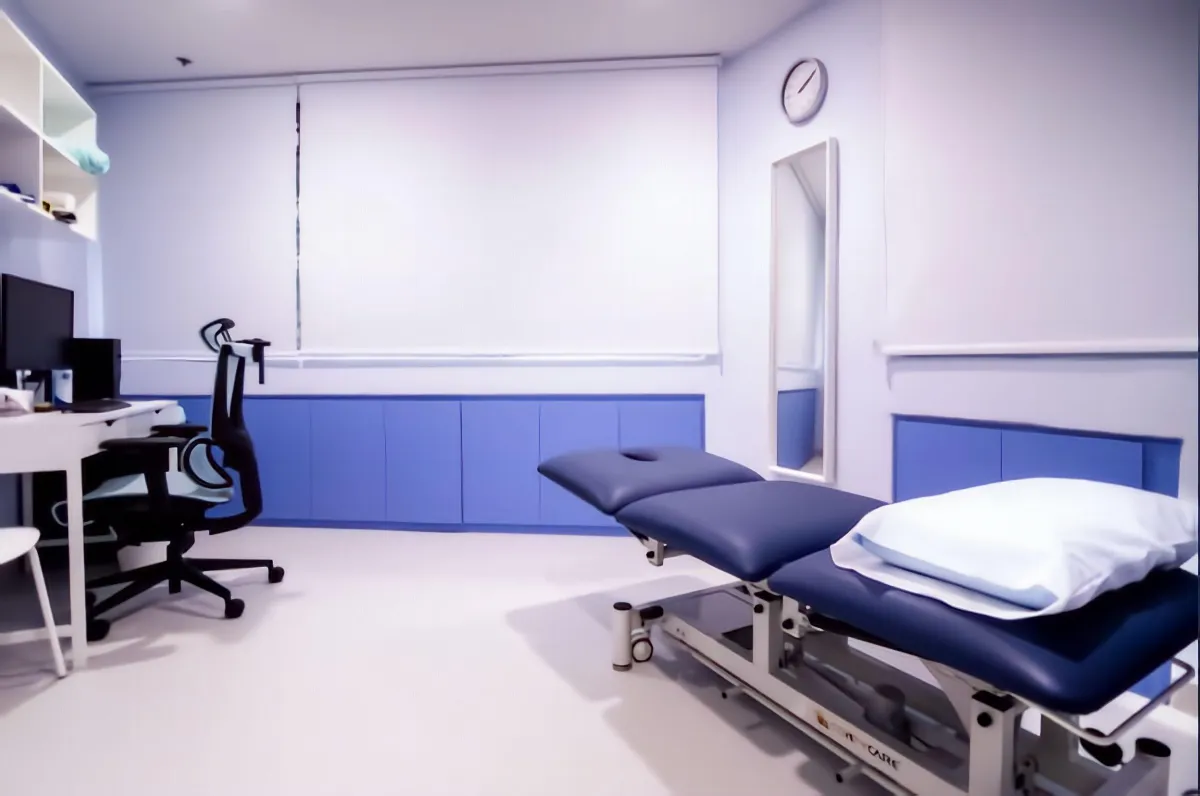
Physio Clinic Renovation in Singapore: The Complete Fit-Out Guide for Clinic Owners
A physio clinic renovation in Singapore sits at the intersection of healthcare licensing, structural engineering, accessibility compliance, and clinical workflow design. Get the sequence wrong, and you're looking at delayed MOH licensing, costly rework, or a space that simply doesn't function for therapists or patients.
This guide walks through exactly what makes physiotherapy clinic fit-outs technically distinct, the regulatory approvals you'll need to navigate, the layout decisions that matter most, and how to choose a contractor who understands the difference. It's grounded in real Singapore project experience, including work completed for Benchmark Physio.
What Makes a Physio Clinic Renovation Technically Different
Physiotherapy clinic fit-outs differ from standard medical renovations because they demand structural floor load verification, specific ceiling clearances for overhead equipment, and specialised shock-absorbing flooring — requirements a GP consultation room simply doesn't share.
Not all clinic renovations are created equal. A GP consultation room has fundamentally different spatial, structural, and mechanical requirements compared to a physiotherapy rehabilitation space. Treating them the same is where most fit-out problems start.
Structural Floor Loading
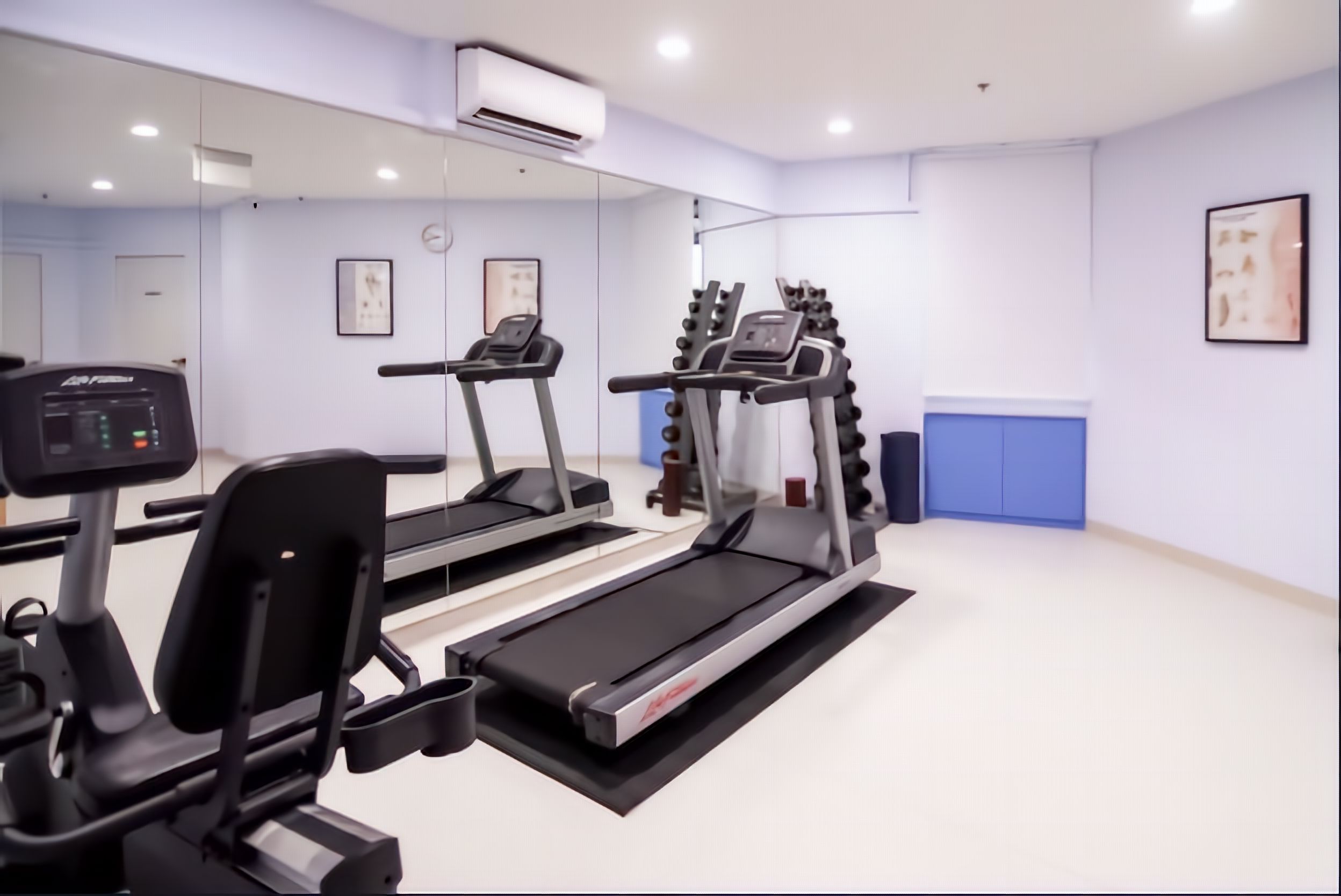
Physiotherapy equipment and rehabilitation gym setups can impose significantly higher floor loads than standard office use. Rehab equipment such as parallel bars, traction tables, treadmills, suspension systems, and weight-training stations may require floor loading capacities in the range commonly associated with commercial gym or retail use — often around 3.0 kN/m² to 5.0 kN/m² or higher depending on equipment concentration and usage patterns.
In Singapore, structural load requirements are assessed under the applicable Eurocode-based structural standards adopted by BCA, with final allowable loads verified by a structural engineer.
Ceiling Height for Overhead Systems
Ceiling height requirements vary significantly by equipment type, so there is no single universal minimum across all overhead therapy systems. Redcord ceiling suspension units, for example, are designed for ceiling heights of approximately 2.66m to 3.27m according to manufacturer specifications, while the Redcord Sliding Suspension System targets an optimal suspension height of 2.35m from the floor — meaning ceilings as low as roughly 2.35m may work for some configurations. TRX systems, by contrast, recommend an anchor height of approximately 1.8m (6 feet) from the ground, which imposes a far less demanding ceiling requirement.
Many commercial units in Singapore provide clear ceiling heights around 2.4m to 2.8m after M&E and ceiling installations, though actual usable clearance varies significantly depending on the building and fit-out conditions.
The practical takeaway: check the manufacturer specifications for every piece of overhead equipment your clinic plans to use, and verify ceiling clearance against those specs before signing a lease. In some cases, structural ceiling modifications are possible, but they add both cost and time to the project.
Sprung and Shock-Absorbing Flooring
Rehabilitation gym areas demand specialised flooring. Rubber sports flooring, cork underlays, or purpose-built sprung timber systems reduce joint impact for patients doing weight-bearing exercises and also reduce fatigue for therapists working long hours on their feet.
Flooring thickness requirements depend on the intensity of use. For general commercial gym flooring and light-use areas, 8mm is the widely cited industry minimum. However, rehab and physiotherapy gym zones with moderate equipment loads typically require 10–12mm of shock-absorbing rubber or an equivalent system. For higher-impact activity areas — such as zones used for plyometrics or functional training — 12mm or thicker is recommended. Your contractor should assess the specific activities planned for each zone and specify flooring thickness accordingly.
This is not purely an aesthetic decision. Flooring selection directly affects patient comfort, impact absorption, slip resistance, acoustic control, equipment durability, and therapist fatigue during long operating hours.
The Regulatory Pathway: MOH, BCA, and SCDF
A physiotherapy clinic renovation in Singapore typically involves coordination across MOH, BCA, and SCDF requirements, with approvals, submissions, and compliance checks occurring at different stages of the project. Missing a regulatory submission or approval can delay renovation timelines, inspections, and ultimately clinic operations.
Healthcare fit-outs are more complex than standard commercial renovations because the physical space itself must support licensing, accessibility, and fire safety requirements from the outset. Engaging a renovation contractor familiar with healthcare projects helps reduce approval delays and costly redesigns later in the process.
MOH Licensing and Healthcare Compliance
Physiotherapy clinics in Singapore are regulated under MOH’s healthcare licensing framework, including the Healthcare Services Act (HCSA), depending on the clinic’s service model. Before a licence can be issued, the premises must meet operational, safety, privacy, and facility requirements suitable for healthcare use.
Treatment rooms should provide sufficient space for therapist movement, equipment, patient handling, and privacy. Open-plan rehab gyms may still require zoning or screening where clinical assessments take place.
BCA Accessibility Compliance
Under the BCA Code on Accessibility, healthcare premises are generally expected to provide accessible routes, compliant ramp gradients, adequate doorway clearances, and accessible toilet facilities where applicable. Because local accessibility requirements differ from overseas standards such as the ADA, all layouts should be designed based on the latest BCA guidelines.
For physiotherapy clinics treating mobility-impaired patients, accessibility planning should be incorporated from the start of the renovation rather than added later as a retrofit.
SCDF Fire Safety Works
Renovations affecting fire-rated partitions, sprinkler systems, smoke detection, or means of escape may require SCDF submissions and approvals before works begin. Depending on the project scope, contractors typically coordinate with Qualified Persons (QPs), engineers, or fire safety consultants to manage the required submissions.
Fire safety coordination is a common source of renovation delays, particularly when submissions are incomplete or handled late in the project timeline.
Layout Decisions That Shape Your Clinic's Performance
The floor plan of a physio clinic directly affects patient flow, therapist efficiency, and your ability to scale services over time. These aren't cosmetic decisions.
Open Rehab Gym vs Private Treatment Rooms
Most physio clinics need both, but the ratio depends on your clinical model. A sports-focused practice will weight heavily toward open rehab space with equipment zones. A clinic specialising in manual therapy or post-surgical recovery may need more enclosed treatment rooms for privacy and focused one-on-one sessions.
The key is designing flexible boundaries. Movable screening partitions, retractable curtain systems, or glass-walled treatment rooms let you adjust the balance as your practice evolves. A rigid layout built entirely around your current patient mix can become a constraint within a year or two.
With commercial interior design Singapore services that include 3D visualisation, you can test multiple layout configurations before a single wall goes up. Seeing the space in three dimensions, with equipment placed and patient flow mapped, reveals problems that flat floor plans hide.
Reception and Waiting Area Flow
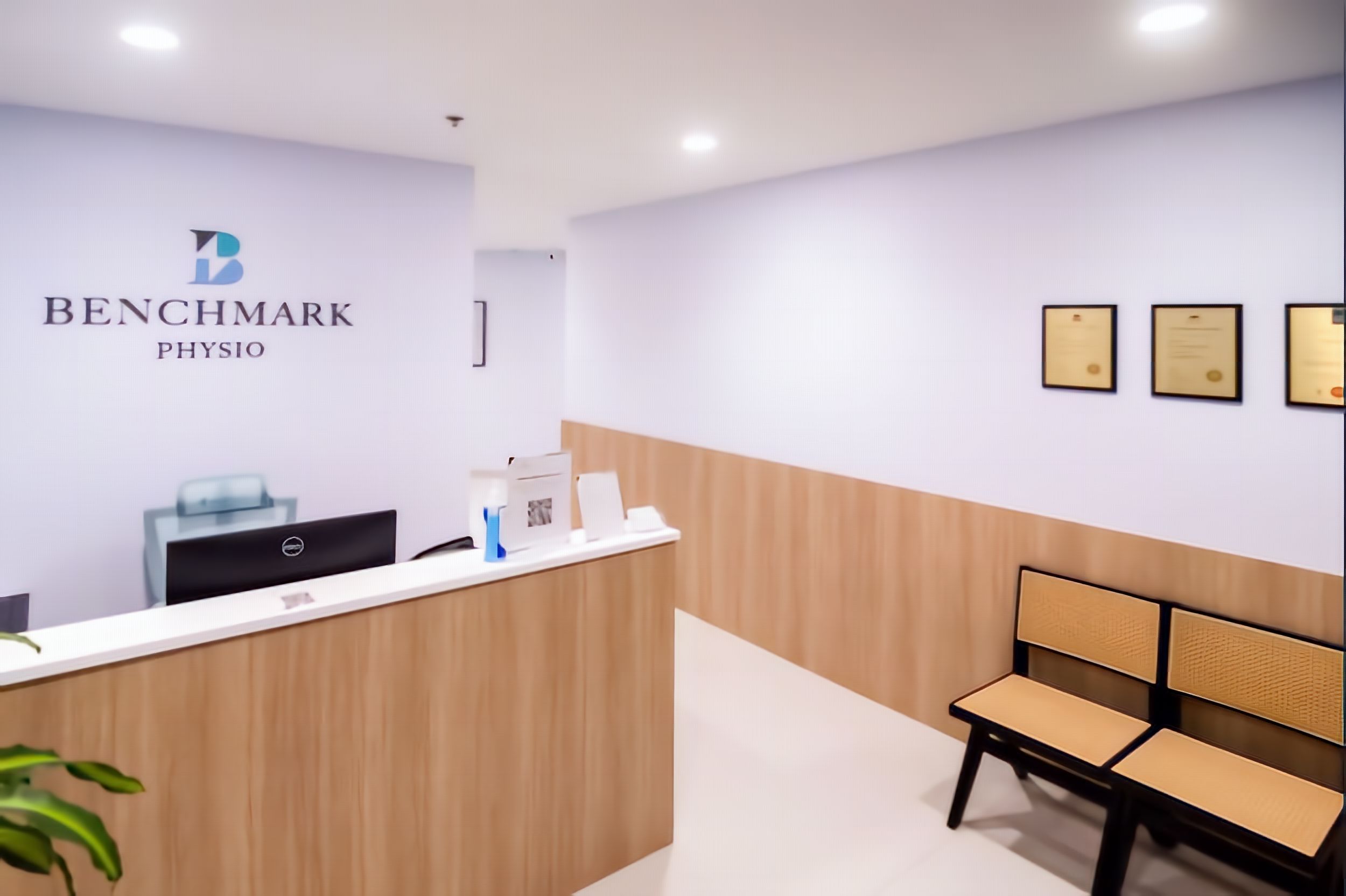
Patients arriving at a physio clinic are often in pain, on crutches, or in wheelchairs. The journey from front door to reception to treatment room needs to be as short and barrier-free as possible. Reception counters should include a lower section for wheelchair users. Waiting areas need space for crutches and mobility aids without blocking corridors.
For that reason, reception design in a physio clinic is a functional exercise, not a branding one. Every metre of unnecessary corridor or awkward corner adds difficulty for your most vulnerable patients.
Utility and Storage Planning
Physiotherapy clinics accumulate equipment quickly: resistance bands, exercise balls, electrotherapy units, hot and cold packs, treatment linens. Dedicated storage that's accessible from both the rehab gym and treatment rooms prevents therapists from making unnecessary trips during sessions.
Beyond equipment, you'll need utility space for a laundry area or linen storage, a sterilisation zone if you offer dry needling or acupuncture, and adequate electrical infrastructure for treatment devices. These utility requirements should be mapped early in the design phase so that M&E (mechanical and electrical) planning accounts for them from the start.
Choosing the Right Contractor for a Physio Clinic Fit-Out
Choose a contractor with demonstrable healthcare fit-out experience in Singapore — one who can manage MOH, BCA, and SCDF submissions directly and deliver the project under a single point of accountability.
A physiotherapy clinic fit-out is not a standard commercial renovation Singapore project. The contractor you choose needs to demonstrate specific capabilities beyond general construction competence.
Healthcare Regulatory Experience
Your contractor should understand the MOH licensing pathway, BCA accessibility code, and SCDF fire safety requirements, and be able to manage submissions and approvals as part of the project scope. If you're managing regulatory applications yourself while also running a clinical practice, timelines will stretch and errors become more likely.
Look for a contractor who has completed clinic fit-outs before and can show you the specific approvals they've managed. Ask about their process for coordinating between MOH requirements and build specifications.
Turnkey Capability
Physio clinic renovations involve design, regulatory submissions, structural assessment, M&E coordination, specialised flooring installation, and aftercare. When these are handled by separate vendors, coordination gaps appear. A single point of contact from concept through to handover reduces miscommunication and keeps the project on schedule.
This is especially important when structural or regulatory issues surface mid-project. A turnkey team can adapt the design, resubmit approvals, and adjust the build timeline without the finger-pointing that happens when multiple subcontractors are involved.
Real Project Track Record
Contract Builders completed the fit-out for Benchmark Physio, a physiotherapy clinic project that required navigating exactly these challenges: equipment load verification, accessibility compliance, MOH facility standards, and a layout designed around clinical workflows rather than generic office templates. That project demonstrated the full scope of what a specialist physio clinic renovation demands.
It's also worth noting that your current premises may have clinic reinstatement Singapore obligations when your lease ends. A contractor familiar with both fit-out and reinstatement can advise on build decisions that simplify future reinstatement, potentially saving you significant costs down the line.
Cost Expectations and Planning Realities
Fit-out costs for physiotherapy clinics in Singapore vary significantly depending on complexity, equipment integration, M&E upgrades, and accessibility modifications. Published data on medical clinic construction costs in Singapore suggests figures in the range of SGD 300–500 psf, though actual costs depend heavily on the scope of work. General commercial fit-outs, by comparison, typically fall between SGD 50–200 psf across basic-to-premium tiers.
Physio clinics sit somewhere within this spectrum. A fit-out with specialised flooring, structural reinforcement, and full accessibility compliance will cost more than a standard office conversion — but the exact figure depends on the condition of the base unit, the extent of M&E upgrades, and the quality of finishes specified. The only way to get an accurate figure is through a site assessment and detailed scope discussion.
One cost factor many clinic owners overlook: the price of delay. Every week your renovation runs over schedule is a week without revenue. Regulatory rejections, structural surprises, and coordination failures between multiple vendors are the most common causes. Planning thoroughly at the front end, and choosing a contractor who manages the full process, is the most reliable way to protect your opening date.
Your Next Step
A physio clinic fit-out has more technical and regulatory layers than most commercial renovations. Getting it right means starting with a contractor who understands physiotherapy-specific requirements, Singapore's healthcare licensing pathway, and how to deliver a space that works for therapists and patients from day one.
If you're planning a physiotherapy clinic renovation, get a consultation for your clinic renovation with Contract Builders. Call 8368 5194 or email go@contract.builders to discuss your project scope, premises suitability, and timeline. One conversation at the right stage can save weeks of rework later.