

Spa Renovation Singapore: Fit-Out Guide
Most spa operators know exactly the experience they want to create for clients. The challenge is translating that vision into a built space that meets Singapore's multi-agency compliance requirements, handles the technical demands of wet-area construction, and opens on schedule. Get any of those wrong, and you're looking at delays, remedial costs, or licensing rejection before you've treated a single client.
This guide walks through what a turnkey commercial renovation in Singapore actually involves when the project is a spa or wellness centre. From regulatory sequencing to waterproofing and ventilation, these are the details that separate a smooth fit-out from an expensive overrun.
Why Spa Fit-Outs Are More Complex Than Standard Commercial Renovations
A typical office or retail renovation involves partitioning, electrical work, flooring, and some cosmetic finishes. A spa fit-out involves all of that plus wet-area construction, drainage modifications, specialised ventilation, and a licensing process that scrutinises your physical layout before you can operate.
In practice, spa projects touch more trades and more regulatory bodies than almost any other commercial renovation category. You're dealing with waterproofing membranes, floor traps, steam extraction, acoustic insulation between treatment rooms, and often structural modifications to accommodate plumbing runs. Each of these elements affects the others, which is why coordinating them under a single contractor matters so much.
The Trades Involved
A mid-range spa fit-out typically requires coordination across hacking and structural works, waterproofing, plumbing, electrical, mechanical ventilation, tiling, carpentry, glass and mirror installation, lighting design, and final finishes. When these trades are managed by separate subcontractors with no single point of accountability, sequencing errors become almost inevitable. For example, waterproofing needs to be fully cured and tested before tiling begins. If the tiler arrives on schedule but the membrane isn't ready, you lose days and risk compromising the waterproofing integrity.
Regulatory Compliance: The Agencies You Need to Satisfy
Spa fit-outs in Singapore require approvals from multiple agencies — URA, SPF, BCA, and NEA — in a specific sequence. Missing or misordering any submission can halt construction or result in licensing rejection.
One of the most common issues we see with spa projects is operators underestimating the compliance roadmap. This isn't a single permit. It's a sequence of approvals from multiple agencies, and the order in which you address them matters.
URA Use Class Confirmation
Before you sign a lease or start renovation planning, confirm the approved use of the commercial unit with URA. Spas can fall under "Health & Medical Care" or "Amusement" depending on the services offered. If the unit's current approved use doesn't match, you'll need a change-of-use application.
URA's official processing time for a standard change-of-use application is approximately 10 working days. However, cases that require multi-agency consultation or additional documentation can take considerably longer. Industry experience suggests complex multi-agency cases typically take 6 to 12 weeks, though URA's own published guidance states only that "more time may be required" beyond the standard 10 working days without specifying an exact extended range. The timeline depends on factors like the specific use class, whether neighbouring tenants or the management corporation raise objections, and how many rounds of queries URA issues. Skipping this step and discovering the mismatch mid-renovation is one of the most disruptive setbacks a project can face.
SPF Massage Establishment Licence
Spa and wellness facilities offering massage services must be licensed by the Singapore Police Force under the Massage Establishments Act. The licensing process includes a review of your physical layout and room configuration. This means your renovation design isn't just an aesthetic decision; it directly affects whether your licence application succeeds. Treatment rooms need to meet specific requirements around visibility, access, and configuration. Design these incorrectly and you'll be retrofitting after the fact.
BCA Building Plan Approval
Any addition and alteration works that affect the structural integrity of your space require submission by a Qualified Person (a licensed architect or structural engineer) and BCA approval before works begin. For most spa fit-outs, this applies. You're typically removing or adding walls for treatment rooms, modifying floor levels for drainage, or adding wet areas that require new waterproofing systems. Starting works without this approval isn't just risky; it's a compliance breach.
NEA Ventilation and Environmental Health
Enclosed treatment rooms, steam rooms, saunas, and any spaces with water features must meet mandatory mechanical ventilation requirements under NEA guidelines. Minimum air change rates and exhaust specifications need to be factored into your M&E design before construction drawings are finalised, not retrofitted later. If your spa includes hydrotherapy pools or bathing facilities, you may also fall under NEA's public swimming pool regulations or require a separate environmental health inspection.
Wet-Area Construction: Where Most Budget Overruns Happen
From experience, waterproofing failures are the single most common cause of costly remedial works in Singapore spa fit-outs. The consequences are severe: water damage to neighbouring units, mould, structural deterioration, and potential liability issues with your landlord or management corporation.

Getting Waterproofing Right
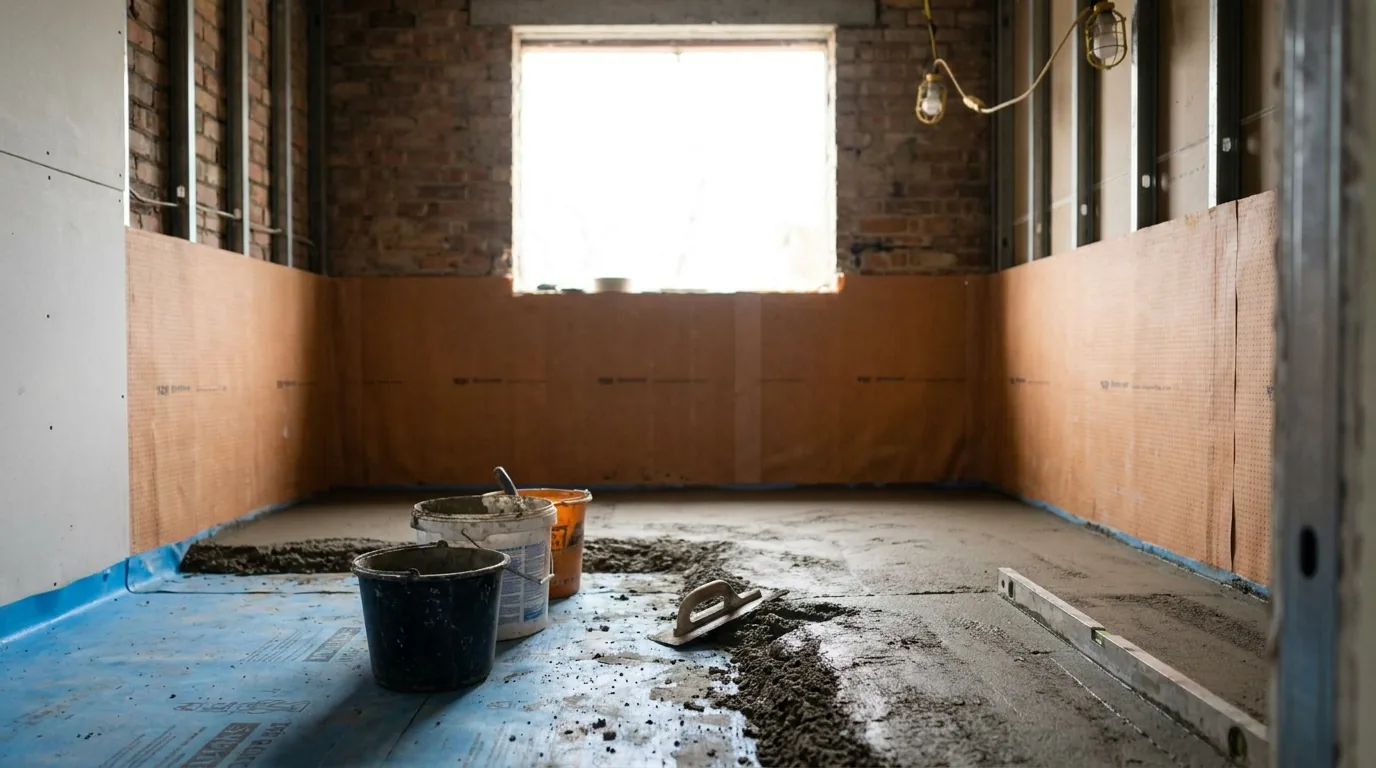
Proper wet-area construction follows a strict sequence. Hacking and substrate preparation come first, followed by waterproofing membrane application, curing time (which cannot be rushed), flood testing to verify integrity, and only then tiling and finishing. Each step needs to be completed and inspected before the next begins.
In premium spa concepts with multiple wet zones, steam rooms, or hydrotherapy features, the waterproofing scope is substantial. Cutting corners here to save on upfront cost almost always results in higher total project cost when remedial works become necessary. Water damage from waterproofing failures typically becomes apparent 12 to 24 months after the membrane begins failing, and leaks can surface months to years after construction — often well after defects liability periods have expired.
Drainage and Floor Gradients
Wet treatment rooms and shower areas require precise floor gradients to direct water toward floor traps. This often means modifying the existing floor slab, which ties back to BCA structural approval requirements. Poor drainage design leads to standing water, slip hazards, and accelerated deterioration of finishes.
Design Considerations That Affect Operations
The look and feel of your spa is important, but so is operational efficiency. Decisions made during the commercial interior design for wellness spaces phase have a direct impact on how smoothly your business runs day to day.
Treatment Room Sizing and Layout
Treatment rooms need to accommodate the bed or table, therapist movement space, a side trolley for products, and ideally some storage. Rooms that look generous on a floor plan can feel cramped once equipment is in place. We typically recommend walking through the workflow physically or using 3D visualisation before committing to final dimensions. It's far cheaper to adjust a wall on a drawing than to hack and rebuild after construction.
Acoustic Separation
Clients expect a calm, private environment. That means acoustic insulation between treatment rooms isn't optional; it's essential to the service experience. Standard drywall partitions often aren't sufficient. Depending on your layout, you may need double-stud walls with acoustic infill, solid-core doors, or ceiling-level sound barriers that extend above the drop ceiling.
Reception and Circulation Flow
The journey from entrance to treatment room should feel intuitive and calming. In practice, this means planning sightlines carefully, separating the retail or reception area from treatment corridors, and ensuring corridors are wide enough for comfortable passage. These details are easy to overlook when focused on the treatment rooms themselves, but they shape the client's first impression.
Realistic Timelines and Budget Expectations
How Long a Spa Fit-Out Takes
For a mid-range spa of 1,000 to 2,000 square feet with three to six treatment rooms, wet areas, and a reception zone, a realistic timeline from design sign-off to handover is 9 to 12 weeks. That range depends on the complexity of M&E and wet works, plus regulatory submission timelines. Projects involving extensive structural works, complex wet zones such as hydrotherapy features, or premium finishes with long material lead times may push beyond this range. If a URA change-of-use application is needed, factor in additional time based on the complexity of the submission.
Delays most commonly come from three sources: late regulatory submissions, material lead times for imported finishes or fixtures, and sequencing errors between trades. A turnkey contractor managing the full scope can mitigate all three because the design, submission, and construction teams are working from the same schedule.
What Drives Cost
Spa renovation costs in Singapore vary significantly based on finish level and scope. Basic functional fit-outs for a wellness or massage centre start at a different price point than premium concepts with custom joinery, imported stone, steam rooms, and hydrotherapy features. Because the range is wide, any meaningful cost estimate requires a site assessment and a clear brief on the concept and services offered.
What we consistently advise clients is to budget for the compliance and wet-works scope first. These aren't areas where you can value-engineer aggressively without creating downstream problems. Allocate your flexibility to finishes, furniture, and decorative elements where adjustments don't affect structural integrity or regulatory compliance.
Don't Forget Reinstatement
One cost that spa operators frequently overlook at the outset is end-of-lease reinstatement. The more extensively you modify a unit, particularly with wet areas, drainage, and structural changes, the more expensive it becomes to restore the space to its original condition when your lease ends. It's worth factoring reinstatement works at end of tenancy into your renovation budget from day one, not as an afterthought three years down the line.
Why Turnkey Matters for Spa Projects
Spa fit-outs involve too many interdependent trades and regulatory touchpoints to manage effectively with separate contractors. When your waterproofing contractor, plumber, M&E engineer, tiler, and carpenter are all operating independently, the coordination burden falls on you. For most spa operators, that's not a productive use of time during what's already a demanding pre-launch period.
A single turnkey contractor who handles design, regulatory submissions, construction, and handover gives you one point of contact and one team accountable for the timeline and budget. That's particularly valuable in a project category where a sequencing error in wet works can cascade into weeks of delay.
Frequently Asked Questions
How much does a spa renovation in Singapore typically cost?
Spa renovation costs in Singapore vary widely depending on finish level, wet-area scope, and whether structural works are required. A basic wellness or massage centre fit-out differs significantly in price from a premium concept with steam rooms, hydrotherapy features, and imported stone. A site assessment and detailed brief are needed before any meaningful estimate can be provided.
How long does a spa fit-out take from start to finish?
A mid-range spa of 1,000 to 2,000 square feet with three to six treatment rooms typically takes 9 to 12 weeks from design sign-off to handover. Projects with complex wet zones, extensive structural works, or premium imported finishes may run longer. If a URA change-of-use application is required, that adds time before construction can begin.
Do I need a licence to operate a spa or massage centre in Singapore?
Yes. Spas offering massage services must obtain a Massage Establishment Licence from the Singapore Police Force under the Massage Establishments Act. The application includes a review of your physical layout, so treatment room configuration must meet SPF requirements before the licence is granted. Getting the design wrong means costly retrofitting after construction.
What is the most common cause of budget overruns in spa fit-outs?
Waterproofing failures are the leading cause of costly remedial works in spa fit-outs. Leaks often surface 12 to 24 months after a faulty membrane begins failing — well after defects liability periods expire — resulting in water damage, mould, and potential landlord liability. Proper sequencing of substrate preparation, membrane application, curing, flood testing, and tiling is essential.
Can I use any commercial unit in Singapore for a spa or wellness centre?
Not automatically. The unit's approved use class under URA must match the services you intend to offer. Spas may fall under "Health & Medical Care" or "Amusement," and if the existing approved use doesn't align, a change-of-use application is required. Signing a lease before confirming this can lead to significant delays or render the unit unsuitable entirely.
If you're planning a spa, wellness centre or beauty salon renovation in Singapore, the most useful first step is a site assessment and a conversation about your concept, licensing requirements, and timeline expectations. Call 8368 5194 or email go@contract.builders to get started.